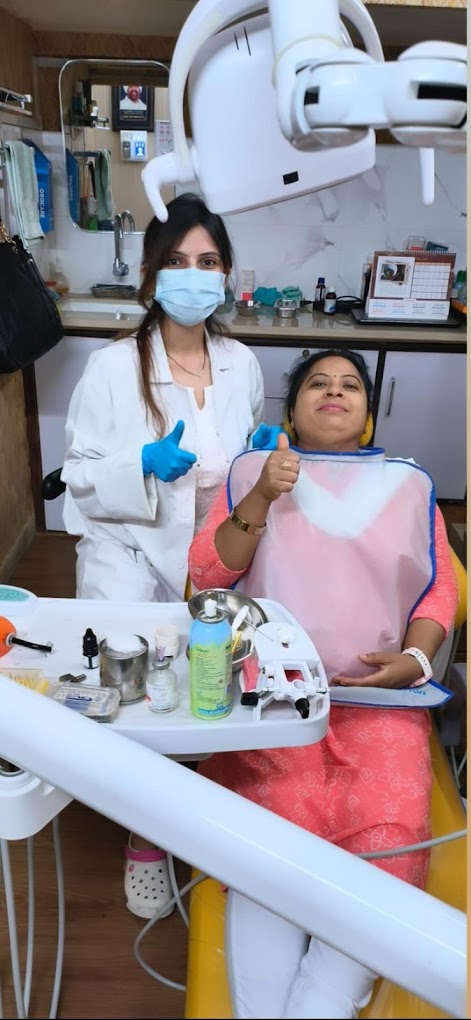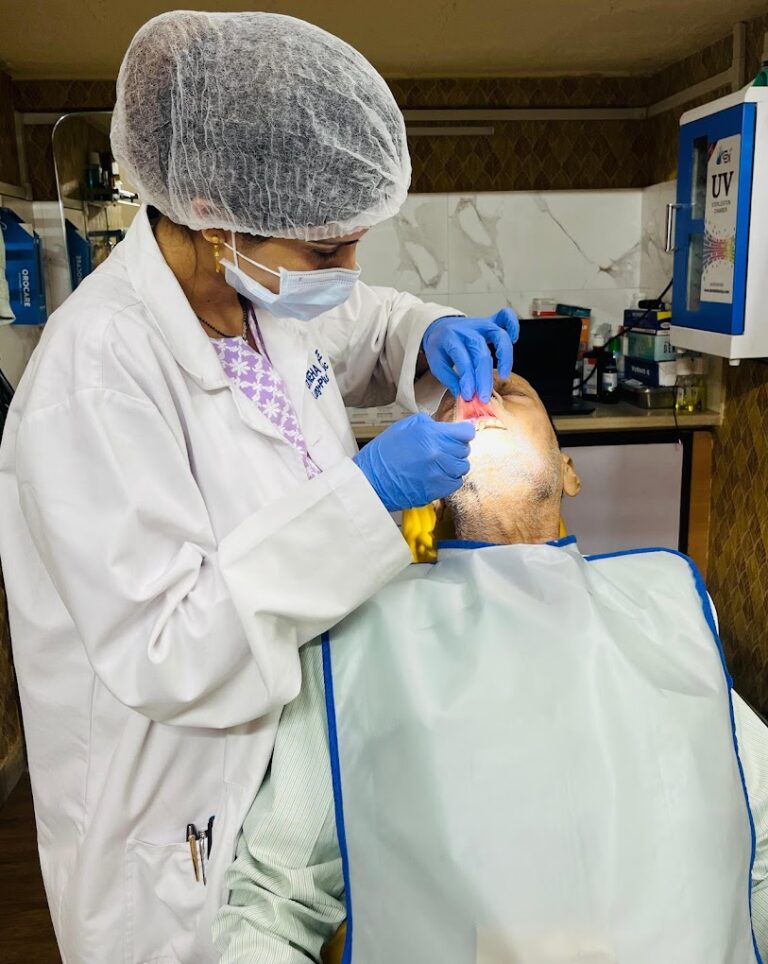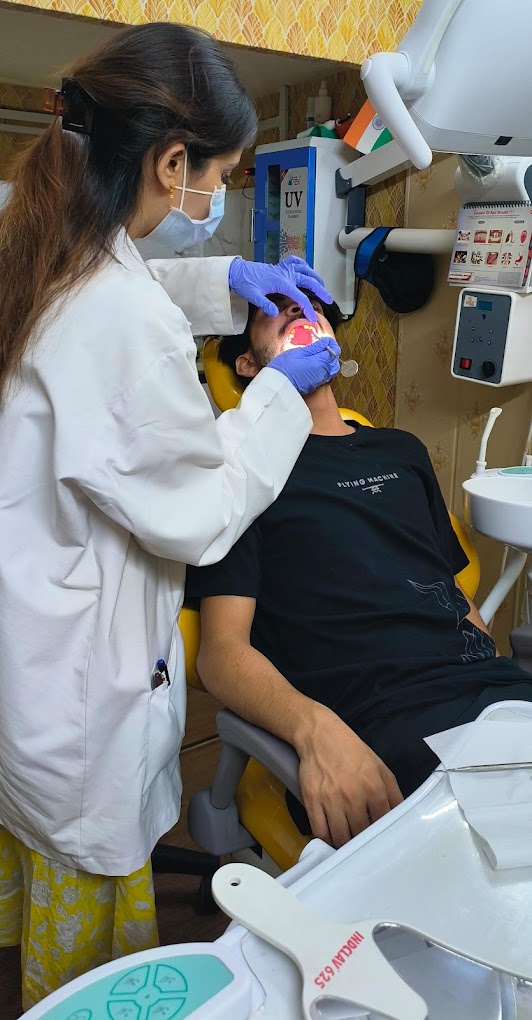
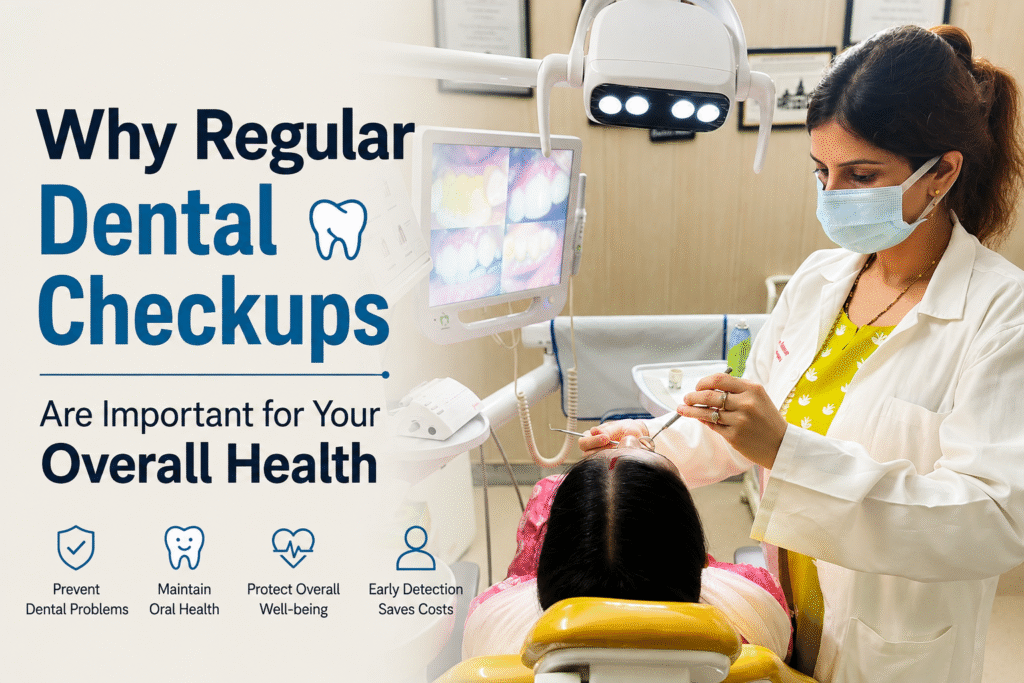
Many people visit a dentist only when they experience tooth pain, sensitivity, swelling, or another noticeable dental problem. However, waiting until something hurts is not always the best approach to maintaining good oral health. Regular dental checkups can help identify potential problems early, support healthy teeth and gums, and help you maintain good oral hygiene over the long term.
Your mouth is an important part of your overall health. Problems involving the teeth and gums can affect eating, speaking, sleep, comfort, and quality of life. This is why preventive dental care should be an important part of your healthcare routine.
If you are looking for a dentist in Varanasi, understanding the importance of regular dental visits can help you make better decisions about your oral health.
What Is a Regular Dental Checkup?
A dental checkup is more than simply getting your teeth cleaned. During a dental appointment, the dentist may examine your teeth, gums, bite, and other areas of your mouth to look for signs of potential problems.
Depending on your individual needs, a dental visit may include:
- Examination of teeth and gums
- Checking for cavities
- Evaluation of gum health
- Professional teeth cleaning
- Assessment of existing dental restorations
- Checking for signs of tooth wear or damage
- Dental X-rays when clinically appropriate
- Oral hygiene guidance
- Discussion of any dental symptoms or concerns
The exact examination and treatment will depend on your oral health and the dentist’s assessment.
1. Helps Detect Cavities Early
Dental cavities do not always cause pain in their early stages. A person may have a developing cavity without noticing any obvious symptoms.
During a regular dental examination, a dentist can look for signs of tooth decay and determine whether treatment is required.
Early detection may allow a dental problem to be addressed before it becomes more extensive. Depending on the condition of the tooth, treatment may involve preventive care, a filling, or another appropriate procedure.
This is one reason why visiting a dentist in Varanasi regularly can be useful even when your teeth feel perfectly fine.
2. Helps Maintain Healthy Gums
Healthy gums are an important part of good oral health. Plaque buildup around the teeth can contribute to gum inflammation and, if not managed, may progress to more serious gum problems.
Warning signs can include:
- Bleeding while brushing or flossing
- Swollen or red gums
- Persistent bad breath
- Gum tenderness
- Receding gums
- Loose teeth in advanced cases
Regular dental examinations can help identify gum-related concerns and provide appropriate advice on oral hygiene and treatment.
3. Professional Dental Cleaning Removes Plaque and Tartar
Daily brushing and flossing are essential, but some hardened deposits may require professional cleaning.
Tartar, also called dental calculus, cannot always be removed effectively with a regular toothbrush. Professional dental cleaning can help remove accumulated deposits from areas that are difficult to clean at home.
Your dentist or dental hygienist can also provide guidance on brushing and flossing techniques to help you maintain better oral hygiene between appointments.
4. Can Help Prevent Tooth Pain and Dental Emergencies
One of the biggest benefits of preventive dental care is identifying problems before they become urgent.
A small cavity, early gum problem, cracked tooth, or other dental issue may become more complicated if ignored.
Regular checkups give your dentist an opportunity to identify concerns and discuss appropriate treatment before symptoms become severe.
Of course, dental emergencies can still happen unexpectedly, but preventive care can help reduce the risk associated with untreated dental problems.
5. Supports Better Oral Hygiene Habits
Sometimes people brush their teeth every day but may still have areas where plaque regularly accumulates.
During a dental checkup, your dentist can evaluate your oral hygiene routine and suggest improvements based on your individual needs.
You may receive advice about:
- Toothbrushing technique
- Flossing or interdental cleaning
- Toothpaste selection
- Diet and sugary foods
- Managing sensitive teeth
- Caring for dental restorations
- Children’s oral hygiene
Personalized guidance can make your daily dental-care routine more effective.
6. Helps Identify Problems You May Not Notice
Not every dental problem produces obvious symptoms.
Some conditions can develop gradually without significant pain. Regular examinations can help your dentist monitor changes in your oral health over time.
This is particularly useful for patients who have a history of cavities, gum problems, dental restorations, orthodontic treatment, or other oral health concerns.
7. Protects Your Natural Teeth
Your natural teeth are designed to function for many years, and preventive care can help you maintain them.
Regular checkups combined with good brushing, flossing, a balanced diet, and timely treatment can help protect your teeth from avoidable damage.
When dental problems are detected early, treatment may sometimes be simpler than treatment required for a more advanced condition.
8. Dental Health Is Connected to Overall Well-Being
Oral health is an important component of overall health. Your mouth is involved in eating, speaking, breathing, and many everyday activities.
Certain oral health conditions can also be associated with broader health concerns. However, oral health should not be viewed in isolation, and dental problems should not automatically be assumed to cause other medical conditions.
Maintaining good oral hygiene and receiving appropriate dental care is one part of taking care of your overall well-being.
If you have an existing medical condition or take regular medication, inform your dentist so that your dental care can be planned appropriately.
9. Important for Children and Adults
Regular dental care is important at different stages of life.
Children benefit from early dental visits because they can learn healthy oral hygiene habits and receive monitoring as their teeth and jaws develop.
Adults may require ongoing preventive care, particularly if they have fillings, crowns, bridges, dental implants, gum problems, or a history of tooth decay.
Older adults may also have specific dental-care needs related to medications, dry mouth, gum health, tooth wear, or existing dental restorations.
The appropriate frequency of dental visits depends on the individual rather than following exactly the same schedule for everyone.
How Often Should You Visit a Dentist?
There is no single schedule that is perfect for every person. Your dentist can recommend an appropriate frequency based on your oral health, dental history, risk factors, age, and treatment needs.
Some people may benefit from more frequent visits, while others may require less frequent routine appointments.
The important point is to avoid waiting until severe pain develops before seeking dental care.
What Should You Do Between Dental Checkups?
Regular professional checkups work best when combined with good daily habits.
To support your oral health:
- Brush your teeth twice a day with fluoride toothpaste.
- Clean between your teeth regularly.
- Limit frequent consumption of sugary foods and drinks.
- Drink enough water.
- Avoid tobacco products.
- Replace your toothbrush when it becomes worn.
- Pay attention to changes in your mouth.
- Schedule a dental appointment if you experience persistent symptoms.
If you notice tooth pain, swelling, bleeding gums, sensitivity, a broken tooth, or another unusual change, speak with a dental professional.
Looking for a Dentist in Varanasi?
If you are searching for a dentist in Varanasi, regular dental checkups can be a simple and important step toward maintaining your oral health.
At Dr. Neha Nainee Dentistry, patients can discuss their dental concerns and receive an appropriate examination and treatment plan based on their individual needs. Whether you need a routine dental checkup or want to discuss tooth pain, gum problems, damaged teeth, or another concern, a professional dental consultation can help you understand your available options.
Final Thoughts
Regular dental checkups are not only about treating problems after they occur. They are an important part of preventive dental care.
Routine examinations can help identify cavities, gum problems, dental damage, and other concerns at an earlier stage. Professional cleaning and personalized oral-hygiene advice can also support healthier teeth and gums.
Instead of visiting a dentist only when you have pain, make dental care part of your regular healthcare routine. Taking care of your teeth and gums today can help you maintain a healthier and more comfortable smile in the years ahead.
Frequently Asked Questions
How often should I get a dental checkup?
The appropriate frequency depends on your individual oral health and risk factors. Your dentist can recommend a schedule suited to your needs.
Can I need a dental checkup even if I have no tooth pain?
Yes. Some dental problems may not cause noticeable symptoms in their early stages. Regular examinations can help identify potential concerns before they become more complicated.
Is professional dental cleaning necessary if I brush every day?
Daily brushing and cleaning between teeth are essential, but hardened tartar may require professional removal. Your dentist can determine whether professional cleaning is appropriate for you.
What are signs that I should see a dentist?
Persistent tooth pain, bleeding or swollen gums, sensitivity, swelling, bad breath that does not improve, damaged teeth, or changes in your mouth are reasons to consider a dental consultation.
Are dental checkups important for children?
Yes. Dental visits can help monitor children’s oral development, identify dental problems, and establish healthy oral-hygiene habits from an early age.